



GABA Receptor
Gamma-aminobutyric acid Receptor; γ-Aminobutyric acid Receptor
GABA receptors are a class of receptors that respond to the neurotransmitter gamma-aminobutyric acid (GABA), the chief inhibitory neurotransmitter in the vertebrate central nervous system. There are two classes of GABA receptors: GABAA and GABAB. GABAA receptors are ligand-gated ion channels (also known as ionotropic receptors), whereas GABAB receptors are G protein-coupled receptors (also known asmetabotropic receptors). It has long been recognized that the fast response of neurons to GABA that is blocked by bicuculline and picrotoxin is due to direct activation of an anion channel. This channel was subsequently termed the GABAA receptor. Fast-responding GABA receptors are members of family of Cys-loop ligand-gated ion channels. A slow response to GABA is mediated by GABAB receptors, originally defined on the basis of pharmacological properties.
All Product Categories
-
GABA Receptor Inhibitors
(151)
View all products
-
GABA Receptor Agonists
(188)
View all products
-
GABA Receptor Antagonists
(137)
View all products
-
GABA Receptor Activators
(75)
View all products
-
GABA Receptor Modulators
(92)
View all products
-
GABA Receptor Controls
(4)
View all products
-
GABA Receptor Ligands
(16)
View all products
-
GABA Receptor Related Products (781)
Related Products (781)

-
Antibodies (14)
-
Related Compound Screening Libraries (1)
-
α5IA
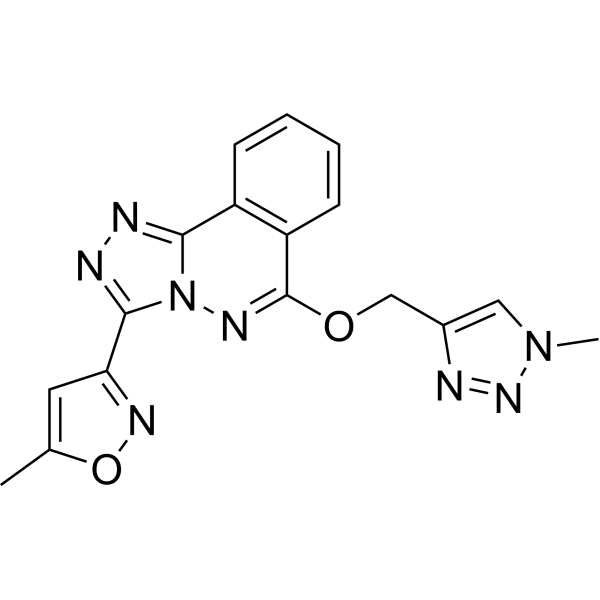 0 ImagesCat. No.: HY-116622CAS No.: 215874-86-5Synonyms: L-822179α5IA (L-822179) is a selective α5 GABAA receptor inverse agonist with neuroprotective potential.
-
MRK-898
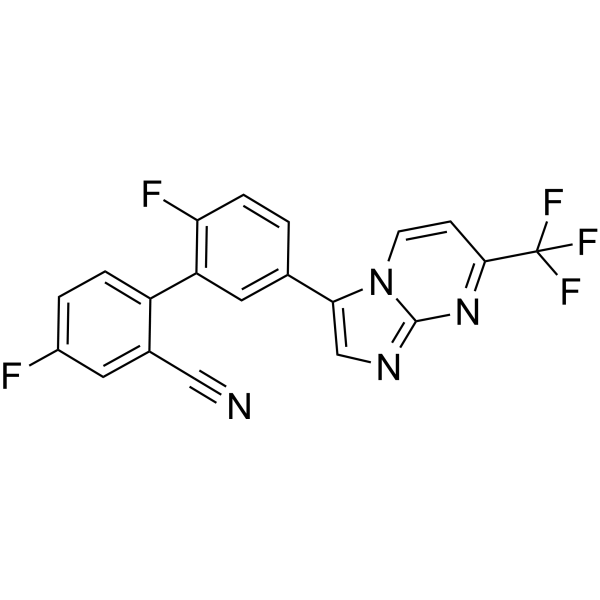 0 ImagesMRK-898 is an orally active GABA(A) receptor modulator. MRK-898 binds to α1, α2, α3 or α5 subunit of GABA(A) receptor with Ki values of 1.2 nM, 1.0 nM, 0.73 nM, and 0.50 nM, respectively. However, α1-containing GABA(A) receptors are identified as the "sedative" and α2- and/or α3-containing receptors as the "anxiolytic" subtype(s).
-
ATPCA hydrochloride
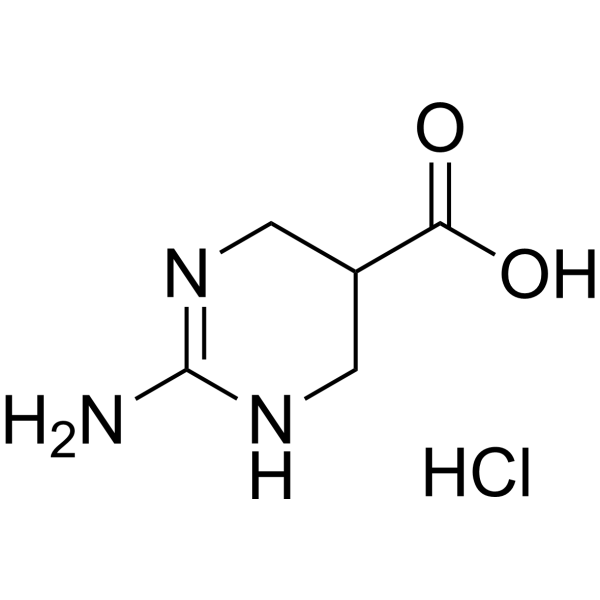 0 ImagesCat. No.: HY-124285CAS No.: 185444-92-2ATPCA hydrochloride is a selective radioactive substrate for BGT1 over GAT1/GAT3.
-
Propofol-d18
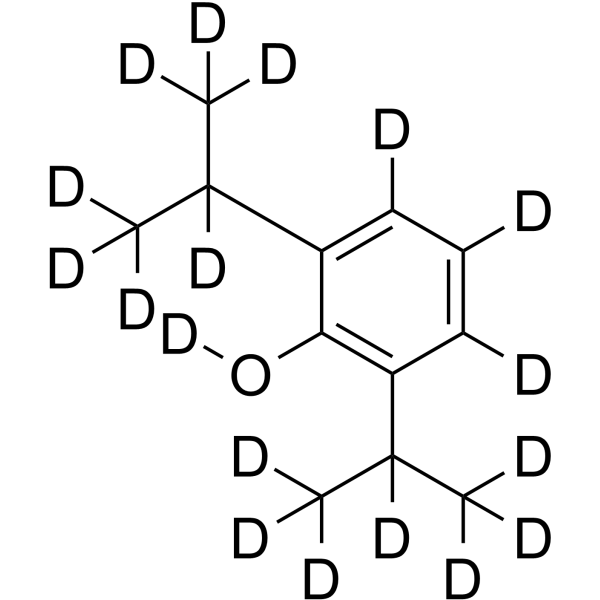 0 ImagesCat. No.: HY-B0649S1CAS No.: 1189467-93-3Propofol-d18 is the deuterium labeled Propofol. Propofol potently and directly activates GABAA receptor and inhibits glutamate receptor mediated excitatory synaptic transmission.
-
MRK-016
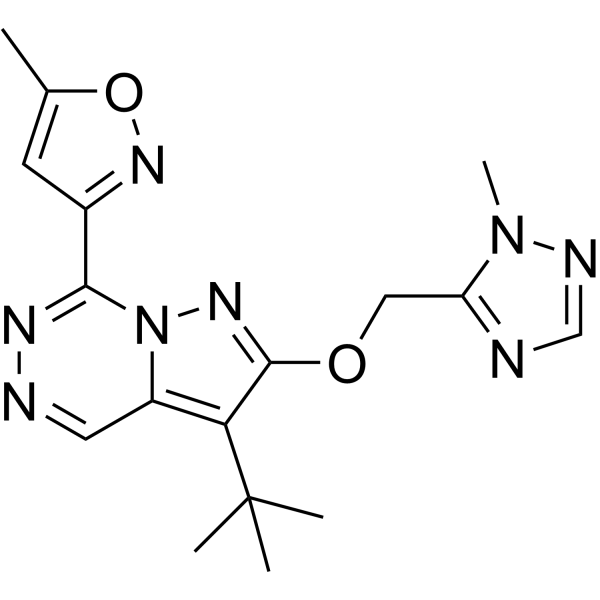 0 ImagesMRK-016 is a selective, orally bioavailable inverse agonist of GABAA α5 receptor, with an EC50 of 3 nM for GABAA α5, and Kis of 0.83, 0.85, 0.77 and 1.4 nM for human GABAA α1β3γ2, GABAA α2β3γ2, GABAA α3β3γ2, and GABAA α5β3γ2, respectively; MRK-016 also readily penetrates the CNS.
-
Fipronil sulfone
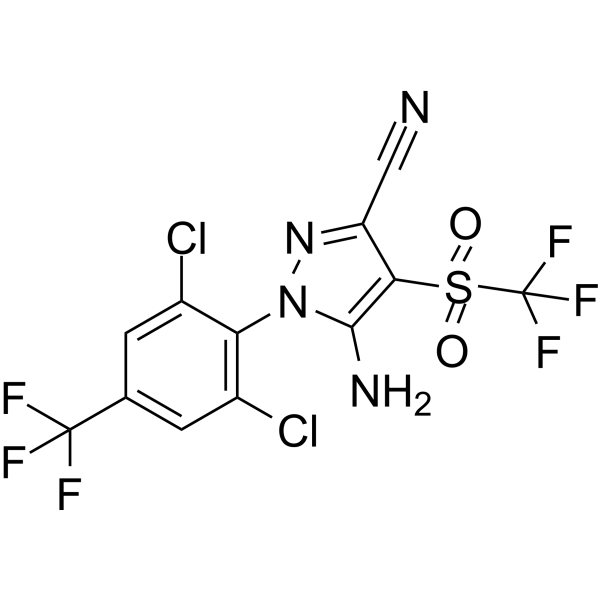 0 ImagesFipronil sulfone is the major metabolite of Fipronil.Fipronil sulfone selectively inhibits
GABA receptor with IC50 of 175 nM (assayed by displacement of 4′-ethynyl-4-n-[2,3-3H2]- propylbicycloorthobenzoate ([3H]EBOB) from the noncompetitive blocker site).
-
(R)-4-Amino-3-hydroxybutyric acid
 0 ImagesCat. No.: HY-W005749CAS No.: 7013-07-2Synonyms: (-)-γ-Amino-β-hydroxybutyric acid; (R)-GABOB; (-)-β-Hydroxy-GABA(R)-4-Amino-3-hydroxybutyric acid ((R)-GABOB) is a 4-aminobutyric acids (GABAB) agonist. (R)-4-Amino-3-hydroxybutyric acid is promising for research of nervous disorders.
-
DL-Pyroglutamic acid
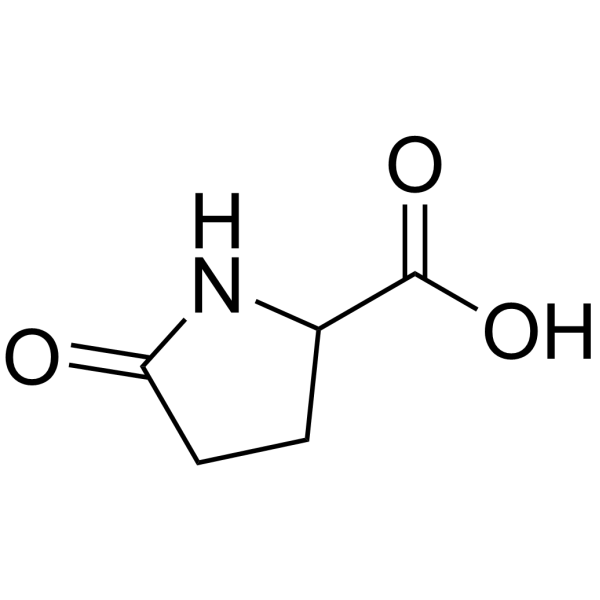 0 ImagesDL-Pyroglutamic acid (CAE) as an inactivator of hepatitis B surface, inactivates vaccinia virus, herpes simplex virus, and influenza virus except poliovirus. DL-Pyroglutamic acid is also a possible inhibitor of GABA transaminase, increases GABA amount with antiepileptic action.
-
TPMPA
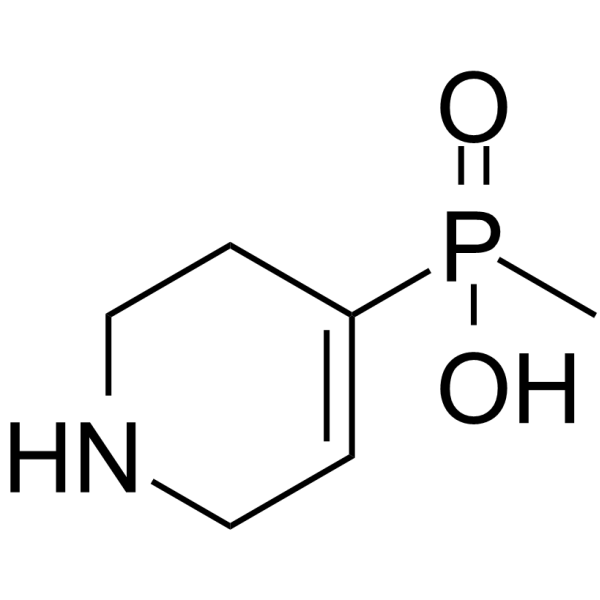 0 ImagesTPMPA, a hybrid of isoguvacine and 3-APMPA, is the first selective antagonist for a GABAC receptor (KB = 2.1 μM), but not to interact with GABAA (KB = 320 μM) or GABAB receptors (EC50 = 500 μM). TPMPA has the potential for the research of suppressing orientation selectivity in ganglion cells.
-
RO 4938581
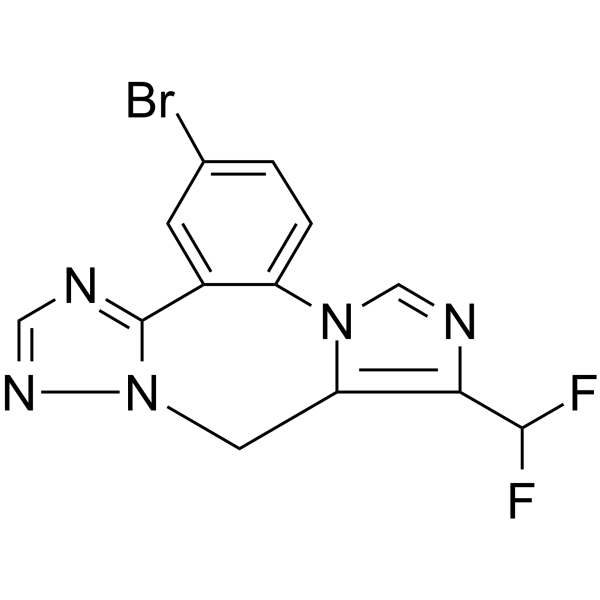 0 ImagesRO 4938581 is a potent and selective GABAA α5 inverse agonist, with a Ki of 4.6 nM for GABAA α5β3γ2a, and shows a lower affinity at α1β3γ2a, α2β3γ2a, α3β3γ2a (Ki, 174, 185, 80 nM, respectively); RO 4938581 is used in the research of cognitive dysfunction.
-
Thiocolchicoside
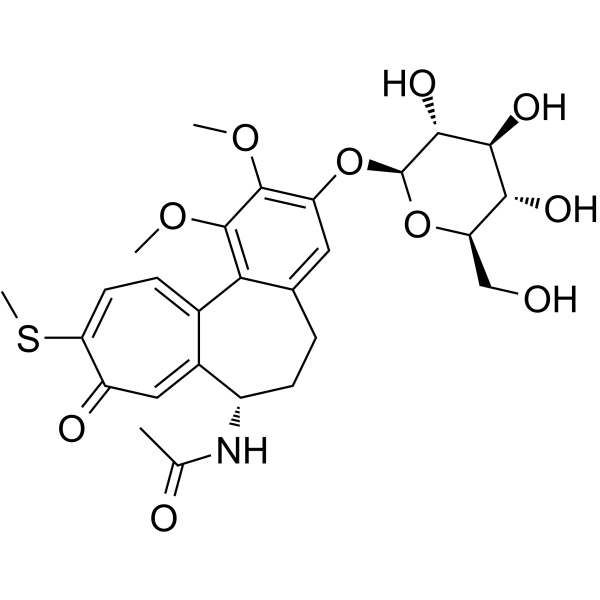 0 ImagesThiocolchicoside is a competitive γ-aminobutyric acid type A (GABAA) receptor antagonist and glycine receptor agonist in the central nervous system. Thiocolchicoside is a semisynthetic sulfur derivative of colchicoside. Thiocolchicoside is a muscle relaxant and has anti-inflammatory, and analgesic properties.
-
Isovaleramide
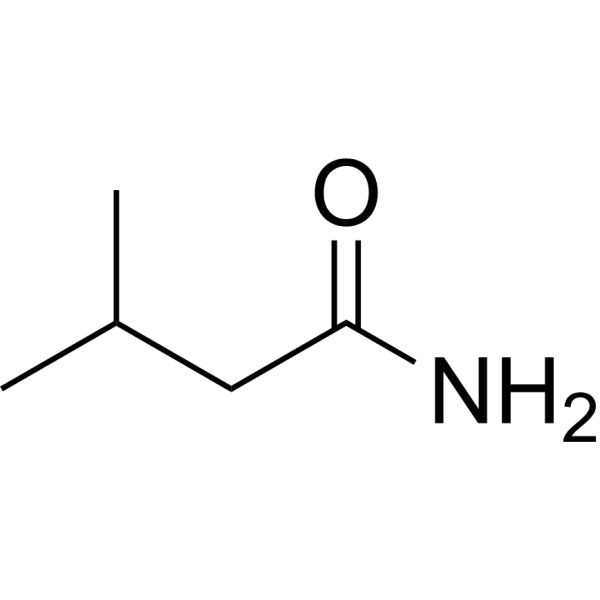 0 ImagesIsovaleramide (3-Methylbutanamide) is an orally active anticonvulsant. Isovaleramide inhibits alcohol dehydrogenase (ADH) activity and regulates GABAergic system. Isovaleramide reduces acute kidney injury. Isovaleramide has antiepileptic, anxiolytic, sedative and hypnotic effects[1].
-
Valerenic acid
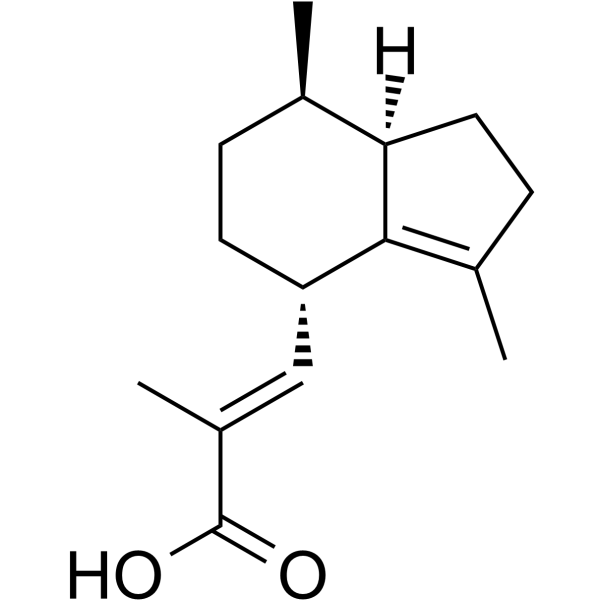 0 ImagesValerenic acid ((-)-Valerenic Acid), a sesquiterpenoid, is an orally active positive allosteric modulator of GABAA receptors. Valerenic acid is also a partial agonist of the 5-HT5a receptor. Valerenic acid mediates anxiolytic activity via GABAA receptors containing the β3 subunit. Valerenic acid also exhibits potent antioxidant properties.
-
Gidazepam
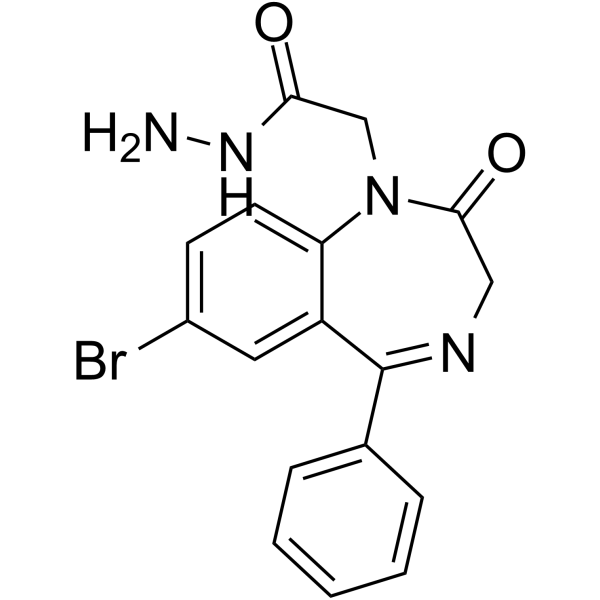 0 ImagesSynonyms: Gidasepam; Hidazepam; HydazepamGidazepam is an agonist of GABA receptor channels (GABA RCs).
-
1-Phenyl-2-pyrrolidinone
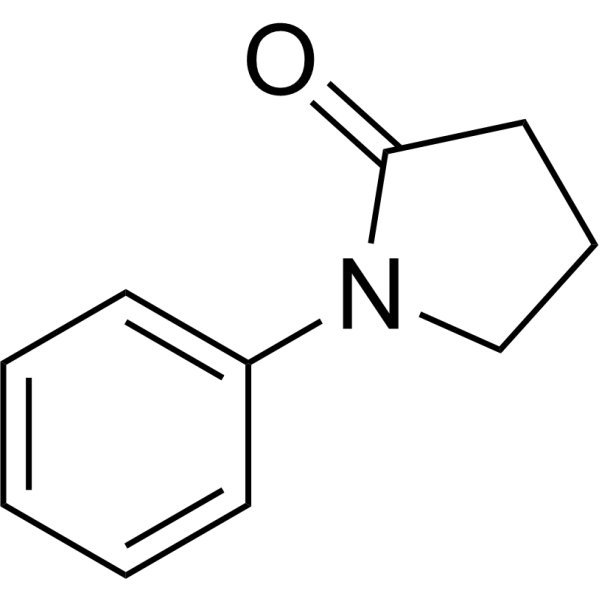 0 ImagesSynonyms: 1-Phenylpyrrolidin-2-one1-Phenyl-2-pyrrolidinone (1-Phenylpyrrolidin-2-one) is a phenyl analogue of GABA with sedative effect, decreasing the exploratory behavior of rats at 50-100 mg/kg (i.v.). 1-Phenyl-2-pyrrolidinone also has been proved to inhibit emotional reactions in dogs and cats. 1-Phenyl-2-pyrrolidinone induces decreases in the pressor reaction to emotional stress without accompanied by normalization of the function of baroreceptor reflexes.
-
CI-966 hydrochloride
 0 ImagesCI-966 hydrochloride is a potent, selective, orally active and brain-penetrant inhibitor of the GABA transporter GAT-1, with IC50s of 0.26 μM and 1.2 μM for hGAT-1, rGAT-1, respectively. CI-966 hydrochloride shows more than 200-fold selectivity over GAT-2, GAT-3, and BGT-3. CI-966 hydrochloride exhibits anticonvulsant and neuroprotective activities.
-
7-Keto-DHEA
 0 ImagesSynonyms: 7-Oxo-DHEA; 7-Ketodehydroepiandrosterone; 7-Oxodehydroepiandrosterone7-Keto-DHEA binds to GABA Receptor, and reduces the ethanol intake in rats. 7-Keto-DHEA exhibits potential in investigation of alcohol dependence disorders.
-
(+)-Nipecotic acid
 0 ImagesSynonyms: (+)-β-Homoproline; (+)-Hexahydronicotinic acid; (+)-3-Carboxypiperidine(+)-Nipecotic acid ((+)-β-Homoproline) is a GABA transport inhibitor with potential antidepressant and anxiolytic activities. (+)-Nipecotic acid can increase the concentration of GABA in the synaptic cleft, thereby enhancing inhibitory neurotransmission. The research on (+)-Nipecotic acid provides a possible direction for the development of new inhibitory compounds for psychiatric diseases.
-
CGP13501
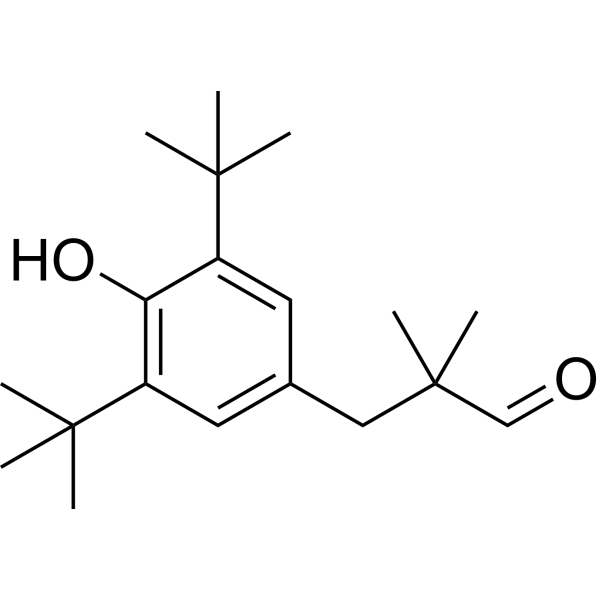 0 ImagesCGP13501 is a positive allosteric modulator of GABAB receptor. CGP13501 is a structural analogue of propofol.
-
Lorediplon
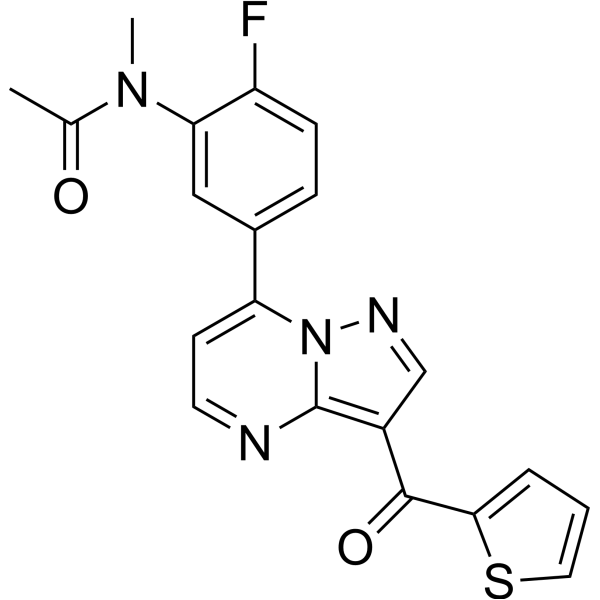 0 ImagesLorediplon is a binder predicted via molecular docking to bind SYT1 and SYN2, with affinity for both targets, and it forms stable complexes to regulate protein function. Lorediplon is also a non-benzodiazepine compound that modulates the GABA receptor and exhibits differential activity toward the α1 subunit. Lorediplon can be used in Alzheimer's disease research.




